
How to Make a Modular Kitchen?
One of the most common questions homeowners and aspiring designers ask today is: How to make a modular kitchen?
The answer actually depends on your intention. Are you planning to build or renovate your own kitchen, or do you want to make modular kitchens professionally for clients? The approach in both cases is different.
Let’s understand both scenarios clearly.
Scenario 1: Making a Modular Kitchen for Your Own Home
If you want to install a modular kitchen in your own home, the first step is choosing the right professional service provider.
Contact Modular Kitchen Companies or Interior Designers
You should contact reliable modular kitchen manufacturers or interior designers in your area. They provide proper planning, module design, material selection, and installation services.
Many homeowners still prefer hiring local carpenters because they seem cheaper. However, there is a big difference between a carpenter-made kitchen and a true modular kitchen.
Why Carpenter Kitchens Are Not Modular Kitchens
Carpenters usually make traditional plywood kitchens on-site. These kitchens typically lack:
-
Factory-made modules
-
Precision finishing
-
Standardized cabinet sizes
-
Proper ergonomics
-
Modern hardware fittings
-
Professional edge finishing
As a result, the kitchen may not look premium and may lack durability and functionality.
Benefits of Choosing Modular Kitchen Companies
Professional modular kitchen companies provide:
-
Factory-manufactured cabinets
-
Smooth and durable finishes
-
Proper module planning
-
Ergonomic working zones
-
Modern accessories and hardware
-
Faster installation
-
Better durability and appearance
Yes, modular kitchens are usually costlier than carpenter-made kitchens, but the quality, look, and longevity justify the price.
Steps Involved in Making a Modular Kitchen at Home
Here are the common steps professionals follow:
-
Kitchen space measurement and layout planning
-
Work triangle and ergonomic design setup
-
Selection of carcass materials like plywood, HDHMR, or WPC
-
Choosing shutter finishes such as laminate, acrylic, or membrane
-
Hardware and accessories selection
-
Factory manufacturing of modules
-
Transportation and installation at site
-
Final finishing and quality checks
This professional process ensures a long-lasting and functional kitchen.
Scenario 2: Making Modular Kitchens Professionally for Clients
If your goal is to build modular kitchens for customers and start a business or career in this field, then learning professional modular kitchen design becomes essential.
Why Professional Training Is Necessary
Modular kitchens involve technical knowledge such as:
-
Module standard sizes
-
Material selection
-
Hardware understanding
-
Kitchen ergonomics
-
Manufacturing techniques
-
Installation planning
-
Client handling and costing
Without proper training, it becomes difficult to deliver professional-quality kitchens.
Learn from Professional Institutes
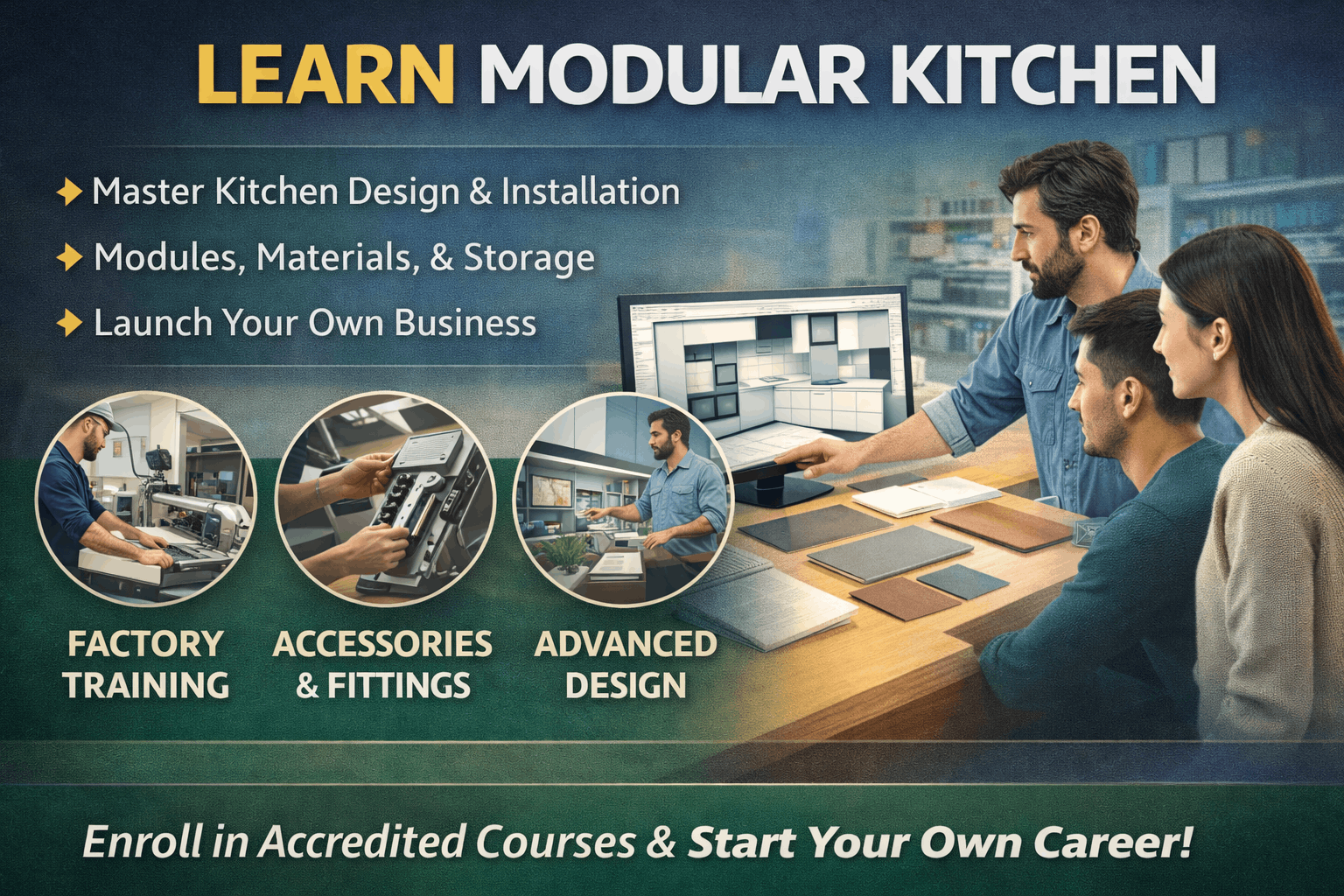
One effective way to build expertise is enrolling in an interior designing or modular kitchen diploma course.
Institutes like MODKRAFT provide professional modular kitchen training where students learn from beginner to advanced levels.
Such courses usually include:
-
Modular kitchen planning
-
Manufacturing process
-
Material and hardware knowledge
-
Software-based kitchen design
-
Site execution methods
-
Costing and business setup
This helps students confidently design and execute projects for clients.
Final Answer
If you want a modular kitchen for your home, hire professional modular kitchen companies or interior designers rather than relying solely on carpenters.
If you want to build modular kitchens for others, learn professional kitchen design through a recognized institute or training program.
In both cases, proper planning, materials, and professional execution are the keys to a successful modular kitchen.
A modular kitchen is not just furniture—it is a carefully designed system that improves comfort, efficiency, and aesthetics in modern homes.