How to Draw a Modular Kitchen? Complete Step-by-Step Guide for Beginners & Professionals
If you know the answer to how to draw a modular kitchen, then the sky is your limit in the interior and kitchen design industry. Today, modular kitchen design is one of the fastest-growing segments in home interiors, and professionals who understand kitchen planning and drawing have immense career and business opportunities.
However, many people think drawing a modular kitchen is easy. In reality, creating a proper kitchen layout requires technical knowledge, practical understanding, and correct planning.
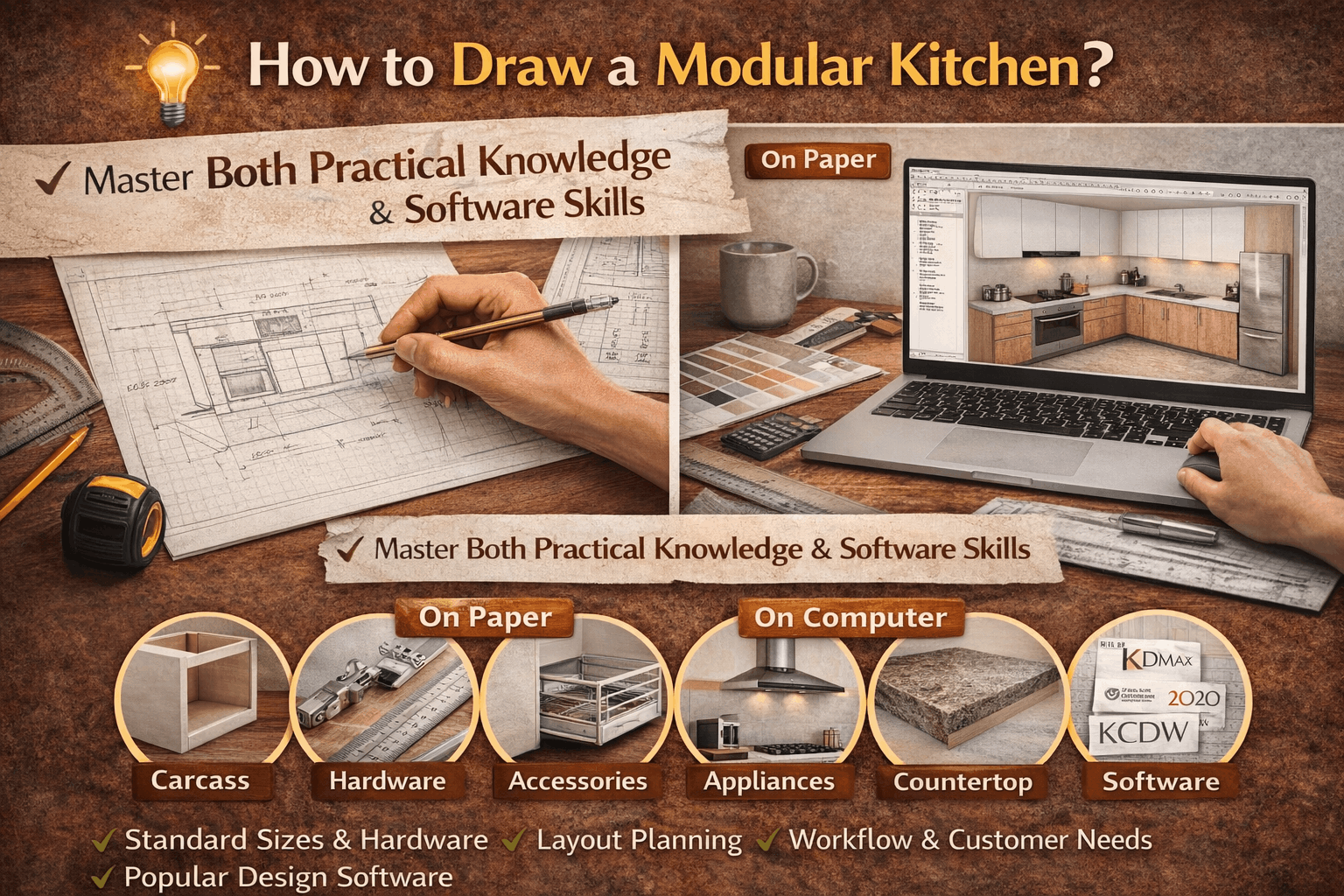
Drawing a modular kitchen on paper and drawing it on a computer are two different things, but one factor is common in both — knowledge of modular kitchen design.
A modular kitchen is a combination of multiple modules or pre-made cabinet parts manufactured using different materials. These modules hold accessories and storage systems that help in effective utilization of kitchen space. All modules are assembled together to create a functional, comfortable, and modern kitchen.
Main Components of a Modular Kitchen
Before learning how to draw a modular kitchen, you must understand its components. A proper design depends on these elements:
1. Carcass
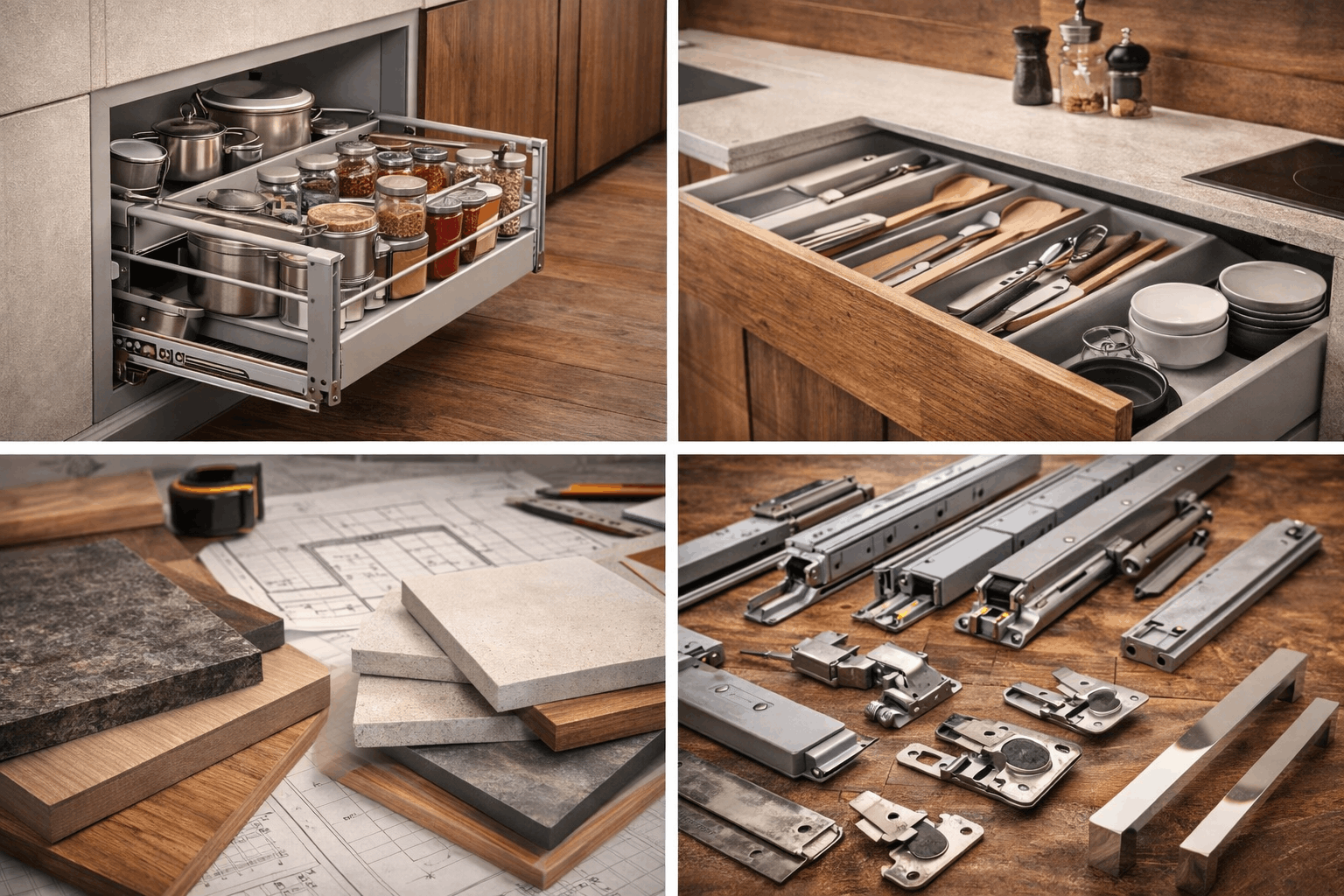
Carcass forms the structure of cabinets and is generally made from plywood, particle board, or engineered boards. It determines the strength and durability of cabinets.
2. Hardware
Hardware includes hinges, drawer channels, handles, and fittings that allow smooth functioning of cabinets and drawers.
3. Accessories
Accessories include baskets, pull-outs, cutlery trays, corner solutions, pantry units, bottle pull-outs, and more, which enhance storage efficiency.
4. Countertop
The countertop is the working surface of the kitchen, usually made of granite, quartz, or solid surface materials.
5. Appliances
Appliances such as hob, chimney, microwave, oven, dishwasher, refrigerator, and RO systems must be planned properly while designing.
Understanding these components is essential before starting the drawing process.
Important Questions to Answer Before Drawing
A professional kitchen layout depends on planning. Before drawing, you must know:
-
Do you know standard carcass unit sizes?
-
Are you aware of hardware and accessory requirements?
-
Do you understand customer needs and usage patterns?
-
Will the kitchen use a gas pipeline or cylinder?
-
What size sink is required?
-
What will be the hob and chimney dimensions?
-
Is a pantry or OTG unit needed?
-
Will RO be wall-mounted or under-sink?
-
Are built-in appliances required?
-
Will handles or aluminium profile handles be used?
-
Is there a corner unit? If yes, will it be carousel or blind corner?
Only a person with solid modular kitchen knowledge can confidently answer these questions. Therefore, anyone assuming modular kitchens can be designed easily without proper knowledge is completely mistaken.
Drawing Modular Kitchen on Paper vs Computer
Manual Drawing on Paper
Drawing by hand helps understand layouts and planning. Designers often sketch initial ideas manually before creating computer models.
Paper drawings require knowledge of:
-
Measurements
-
Layout planning
-
Cabinet distribution
-
Appliance placement
-
Workflow triangle
Computer-Based Drawing
Computer drawings are accurate and professional. They allow 3D visualization and help customers understand final kitchen design.
However, computer drawing requires:
-
Software knowledge
-
System compatibility
-
Proper training
-
Practical kitchen design knowledge
Without technical knowledge of kitchens, software alone cannot create functional designs.
Popular Software Used for Modular Kitchen Design
Professionals use specialized software to create detailed designs and client presentations. Commonly used kitchen design software includes:
-
KCDW Software
-
KD MAX
-
2020 Design Software
-
ArtiCAD
These tools offer advanced features like 3D visualization, costing, cabinet libraries, and realistic rendering. However, such software solutions are expensive and require training.
For beginners, simpler tools or manual drawings can also be effective if proper kitchen knowledge is available.
Skills Required to Draw Modular Kitchens
To master how to draw a modular kitchen, you need:
✔ Knowledge of standard cabinet dimensions
✔ Understanding of accessories and hardware
✔ Customer requirement analysis
✔ Appliance planning skills
✔ Space utilization techniques
✔ Workflow and ergonomics knowledge
✔ Software drawing skills
Both technical and practical knowledge are equally important.
Conclusion
Learning how to draw a modular kitchen is not only about creating drawings but about understanding how kitchens function. Knowledge of modules, hardware, accessories, and customer requirements plays a crucial role.
Software tools help visualize ideas, but strong modular kitchen knowledge is what truly makes a professional designer successful. Whether you draw on paper or computer, mastery comes from understanding kitchen planning fundamentals.
If you develop the right knowledge and skills, designing modular kitchens can become a highly rewarding career or business opportunity.