What Is the Average Weight-Bearing Capacity of a Modular Kitchen Basket?
When planning a modular kitchen, homeowners usually focus on design, finishes, and storage space. However, one crucial technical factor that directly affects durability and user experience is the weight-bearing capacity of modular kitchen baskets. If baskets and channels are not chosen correctly, drawers may sag, jam, or get damaged over time.
In this article, we explain the average weight-bearing capacity of a modular kitchen basket and also clarify the difference between telescopic channels, tandem systems, and quadro channels, along with their load capacities.
Why Weight-Bearing Capacity Matters in a Modular Kitchen
Kitchen baskets store heavy items daily, such as:
-
Steel utensils and cookware
-
Grocery stock
-
Oil containers
-
Pressure cookers
-
Mixer jars and appliances
-
Plates and storage containers
If drawer channels are weak, they wear out quickly. Proper weight-bearing capacity ensures:
• Smooth sliding operation
• Long-lasting durability
• Safe storage of heavy utensils
• Better user convenience
• Reduced maintenance costs
Therefore, selecting the right basket system is essential.
Average Weight-Bearing Capacity of Kitchen Baskets
In most modular kitchens, basket capacity depends on the type of channel system used. On average:
| Basket Type | Average Weight Capacity |
|---|---|
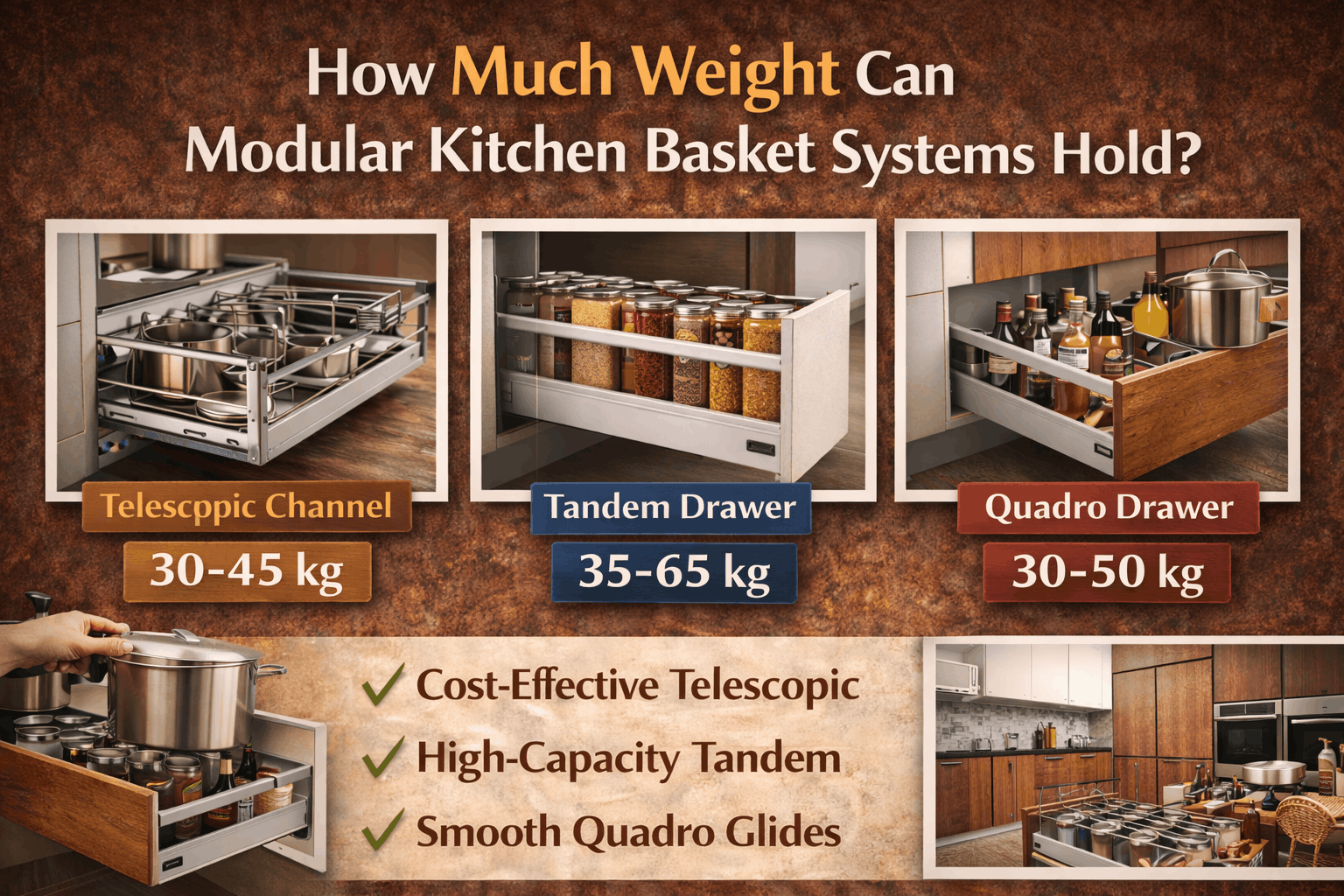
| Telescopic Channel Basket | 30–45 kg |
| Tandem Drawer System | 35–65 kg |
| Quadro Channel System | 30–50 kg |
Premium systems may even support higher loads depending on brand and hardware quality.
Types of Channel Systems Used in Modular Kitchen
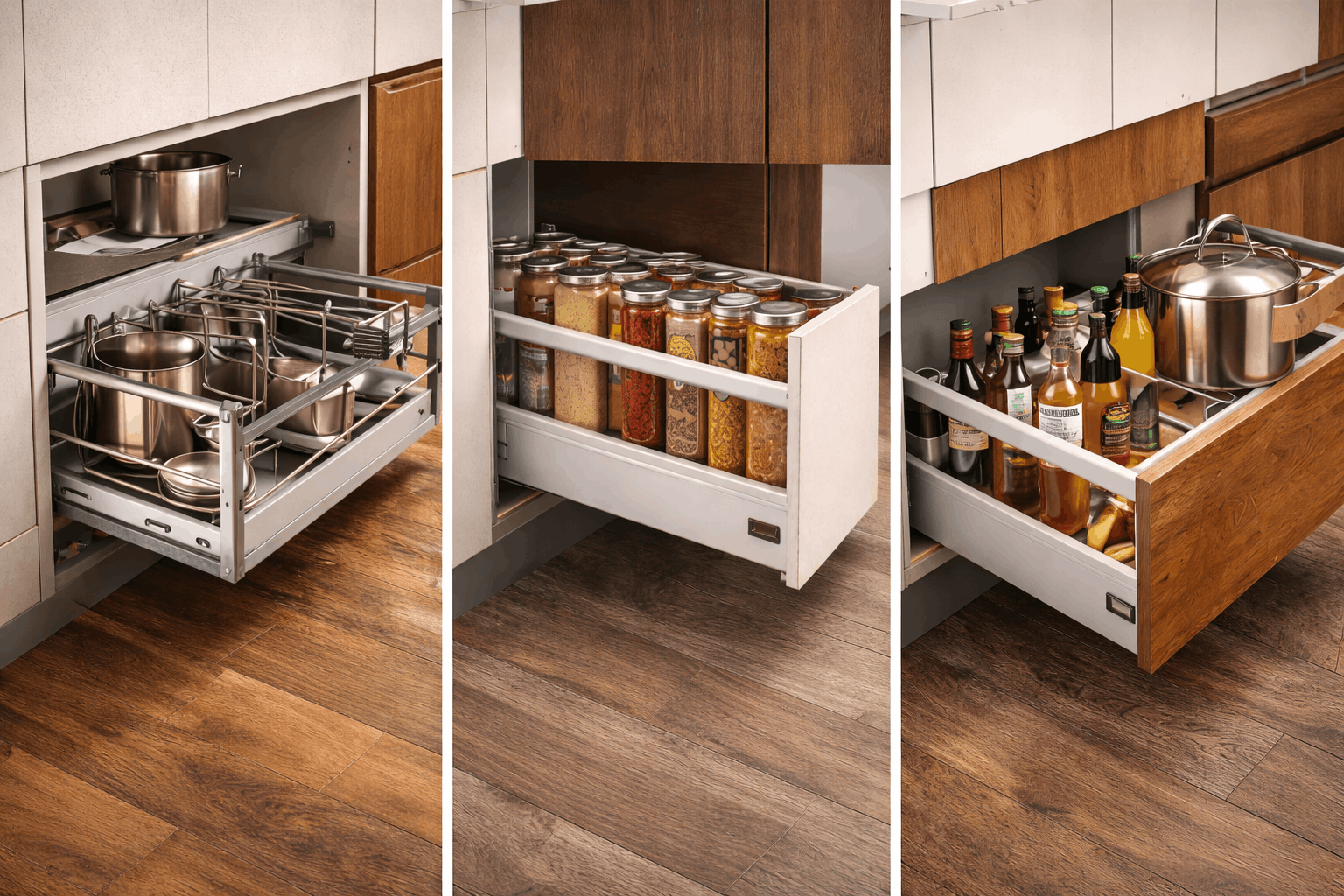
1. Telescopic Channel System
Telescopic channels are the most common and economical drawer systems used in modular kitchens.
How it works:
It consists of sliding metal runners with ball bearings that allow the drawer to slide in and out smoothly.
Weight-bearing capacity:
Usually supports 30–45 kg per drawer.
Advantages:
• Affordable
• Easy installation
• Suitable for normal kitchen usage
• Easily available in the market
Limitations:
• Slight noise over time
• Drawer remains partially visible when open
• Not as smooth as premium systems
Telescopic channels are suitable for standard kitchens with moderate storage loads.
2. Tandem Drawer System
Tandem drawers are modern concealed channel systems widely used in premium modular kitchens.
How it works:
Channels are hidden below the drawer, providing a sleek and premium appearance. Most tandem systems include soft-close mechanisms.
Weight-bearing capacity:
Typically supports 35–65 kg, depending on the model.
Advantages:
• Smooth and silent operation
• Soft closing feature
• Hidden hardware appearance
• Premium finish and durability
• Full drawer extension available
Limitations:
• Higher cost compared to telescopic channels
• Requires precise installation
Tandem systems are ideal for heavy utensil storage and premium kitchen designs.
3. Quadro Channel System
Quadro channels are also concealed runners similar to tandem systems but often more compact in design.
How it works:
The mechanism is placed under the drawer, allowing smooth concealed movement.
Weight-bearing capacity:
Typically ranges between 30–50 kg.
Advantages:
• Smooth sliding action
• Concealed hardware look
• Soft-close options available
• Space-efficient design
Limitations:
• Slightly costlier than telescopic channels
• Requires proper alignment during installation
Quadro systems are suitable for mid-to-high-end kitchens.
Which Channel System Should You Choose?
Selection depends on usage and budget:
• For budget kitchens → Telescopic channels are sufficient.
• For modern kitchens → Quadro channels provide better performance.
• For premium kitchens → Tandem systems are ideal.
Heavy storage drawers like pantry units or utensil drawers benefit from tandem systems due to higher load capacity.
Factors Affecting Basket Load Capacity
Weight capacity does not depend only on channels. Other factors include:
• Quality of basket material
• Thickness of drawer base board
• Installation quality
• Cabinet structure strength
• Frequency of usage
Proper installation and hardware quality greatly impact performance.
Common Mistakes to Avoid
Many homeowners face drawer problems due to:
• Choosing low-quality hardware
• Overloading drawers
• Using telescopic channels for heavy storage
• Improper installation
Selecting proper hardware prevents these issues.
Final Recommendation
For long-lasting modular kitchens:
✅ Use telescopic channels for light to medium storage.
✅ Use tandem systems for heavy drawers.
✅ Use quadro channels for modern compact designs.
✅ Always match drawer type with storage load.
Conclusion
The average weight-bearing capacity of a modular kitchen basket ranges between 30 kg and 65 kg, depending on the channel system used. Understanding the difference between telescopic, tandem, and quadro channels helps homeowners make better decisions.
Investing in quality hardware ensures smoother operation, longer durability, and hassle-free kitchen usage for years. A modular kitchen is a long-term investment, and choosing the right drawer system guarantees both performance and convenience.
Really liking the current promotions they have going on. It adds a lot of excitement to the game. Glad I found pak234login.
Love the vibrant community and the variety of slot providers they partner with. You can always find something new to try whether you prefer classic fruit machines or modern video slots. The loyalty program actually rewards you meaningfully after a while. macaugamingclub